Cover of '101 Illustrated Bible Contradictions: And 12 Keys To Unlock The Truths These Reveal' – Rediscovering Jesus' Subverted Teachings and the Father's Love, Book 3

101 Illustrated Bible Contradictions: And 12 Keys To Unlock The Truths These Reveal

What if the Bible's contradictions are clues, not merely errors?

101 Illustrated Bible Contradictions exposes the hidden seams: verses that clash, timelines that twist, doctrines that collide.

But beneath the chaos lies some deeper truths.

These cracks reveal two competing images of God: the wrathful Yahweh of Moses versus the loving Father Jesus revealed. And a divided faith, torn between Jesus' Kingdom of Love and Paul's empire-friendly gospel.

In this eye-opening guide, 12 Keys unlock what the contradictions show us: how Scripture was shaped, edited, and weaponized… and how the Truth still shines through. See the flaws. Find the freedom. Rediscover the Father.

rediscoverbiblecontradictionsscripturetruth

Pages: 341

Every contradiction is a gift in disguise: an opportunity to find truth.

Like a jigsaw puzzle with misplaced pieces, Bible contradictions reveal where we've misunderstood the picture. This book presents over 100 illustrated contradictions—from King Jehoiachin's age to Jesus' conflicting genealogies—and reveals the keys that unlock over 90% of them. The goal isn't to destroy faith, but to rebuild it on truth.

Who This Book Is For

Truth-seekers who've noticed Bible inconsistencies, those questioning biblical inerrancy, and anyone ready to approach Scripture with humility like the Bereans.

Key Benefits

  • See over 100 illustrated contradictions with clear explanations
  • Discover 12 keys that resolve over 90% of contradictions
  • Learn to approach Scripture with humility and curiosity
  • Understand how textual errors reveal deeper truths
  • Find freedom from rigid inerrancy that crushes faith
  • Experience the excitement of discovering truth through contradictions

Featured Insights
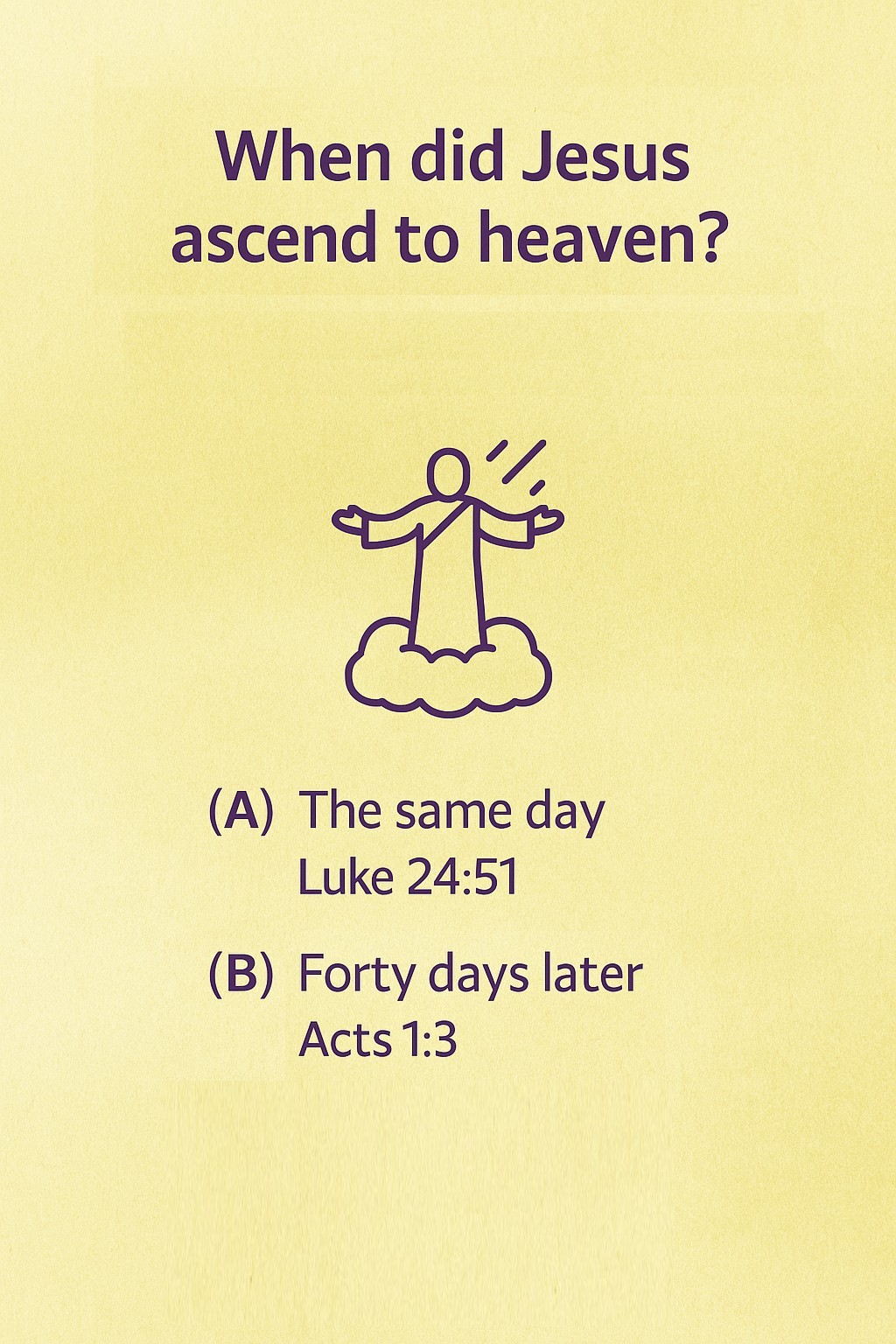
The Ascension Timeline Mystery

When exactly did Jesus ascend to heaven? Luke 24:51 says it happened on the same day as the resurrection, while Acts 1:3—also written by Luke—says Jesus appeared to the disciples over forty days before ascending. The same author, two completely different timelines. This contradiction matters because it touches on how the resurrection appearances were experienced—were they fleeting and dramatic, or drawn-out and instructional? It suggests that theology, not chronology, shaped the story's telling.

"If the timeline shifts depending on the message being conveyed, it suggests that theology—not chronology—shaped the story's telling."
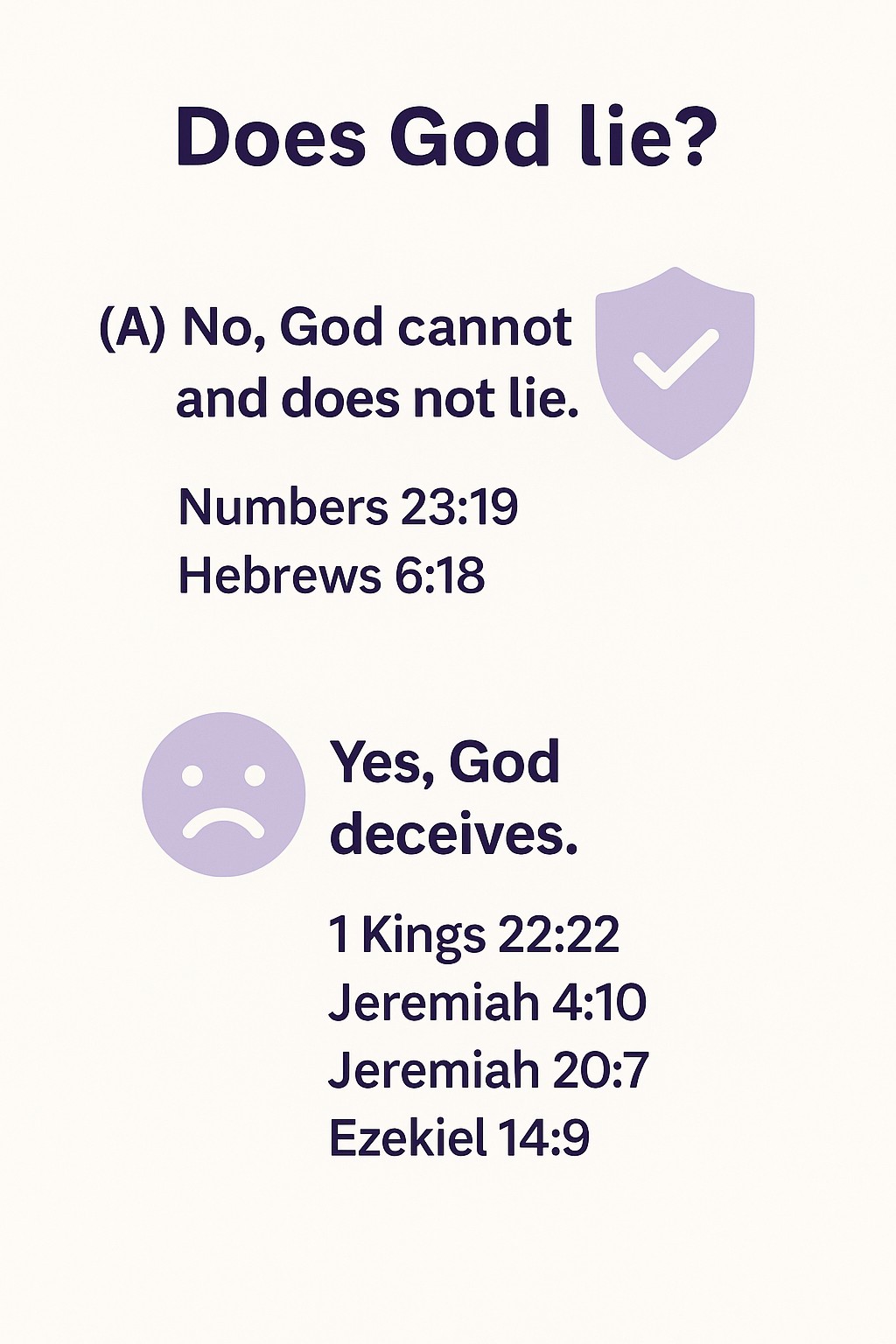
Does God Lie?
Does God Lie?

Multiple verses emphatically state that God cannot lie—Numbers 23:19, 1 Samuel 15:29, Titus 1:2, and Hebrews 6:18 all affirm God is truthful and incapable of deception. But then we read that God sends a lying spirit into the mouths of prophets to deceive a king (1 Kings 22:23), and Ezekiel 14:9 says if a prophet is deceived, it's because God Himself has deceived him. Apologists say God permits deception as judgment, but that still means God initiates falsehood. The Bible says both.

"Is God always honest—or is He sometimes strategic in using deception? The Bible says both."
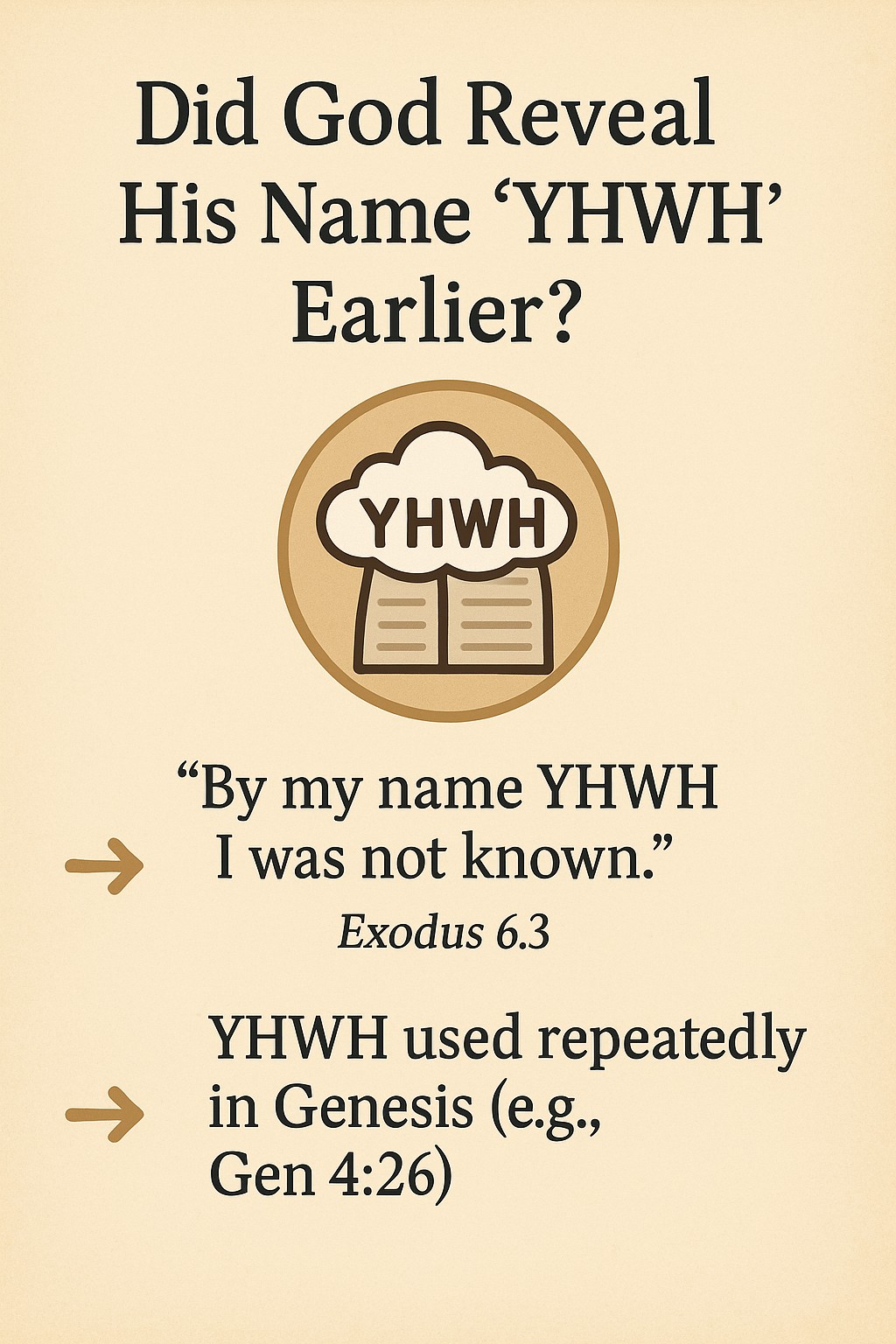
When Was God's Name First Revealed?

According to Exodus 6:3, God tells Moses, 'I appeared to Abraham, Isaac, and Jacob… but by my name YHWH I was not known to them.' This seems clear: the first reveal. But flip back to Genesis, and the name YHWH appears dozens of times throughout the patriarchal narratives. Genesis 4:26 says people were already calling on 'the name of the LORD.' Did the name suddenly vanish from memory before Moses? This contradiction questions the internal consistency of God's self-disclosure—a major theme in the Bible.

"If even God's name rollout is fuzzy, what else might be layered, rewritten, or theologically repackaged?"

What Readers Will Feel & Discover

"Don't hold on too tightly to what you may have heard about 'Biblical Inerrancy.' Even a child who flips through these pages can see there are clear errors and inconsistencies. You're going to need to be humble and let the truth take you where it will."

Introduction

"That's how you should view these: Opportunities to get at TRUTH. You find yourself getting excited when somebody says 'Here's another mismatch'—that's how contradictions become gifts."

Introduction

"Here's the amazing part: I believe there are at least a dozen keys which resolve or clarify over 90% of the contradictions."

Introduction

A Sneak Peek...

Here are 4 contradictions to whet your appetite:

Contradiction Number 2: King Jehoiachin's Age

King Jehoiachin's Age Contradiction Image

According to 2 Chronicles 36:9, he was 8 years old. But in 2 Kings 24:8, it says he was 18 years old. That's a huge difference. Ten years is no small error when you're talking about whether a child or a young adult was ruling a kingdom. This contradiction has minor theological significance but raises real concerns for people who view Scripture as inerrant down to every word and number. Critics argue that this discrepancy reveals how historical books may have been copied or edited over time with occasional numerical mistakes. Defenders of the Bible often try to "explain it away" by suggesting the Chronicler's version (8 years old) is a copyist's error. The Hebrew characters for 8 (שׁמֹנֶה) and 18 (שְׁמֹנֶה־עֶשְׂרֵה) are very similar and may have been misread by a scribe. Others argue that Jehoiachin may have been made co-regent at 8 and became full king at 18, although there's no strong textual support for that theory. Either way, it paints a picture of fragile bible texts where seemingly simple details don't align.

Contradiction Number 3: Jesus' Lineage

Jesus' Lineage Contradiction Image

This contradiction appears in the genealogies of Jesus found in the Gospels of Matthew and Luke. Amazingly, most churchgoers are unaware this one even exists! Matthew 1:6 traces Jesus' lineage through Solomon, the royal son of David, which fits a narrative of kingship. But Luke 3:31 traces it instead through Nathan, another son of David who never ruled as king. Both can't be biologically correct if taken literally. So which is it? Theologically, this matters because Messianic prophecy was thought to require descent from David, often interpreted to mean through the royal line. Some try to reconcile the two by saying Matthew gives Joseph's LEGAL line, while Luke gives Mary's biological line (with Heli as Mary's father and Joseph's father-in-law), despite the lack of evidence for this. Others propose the genealogies are symbolic, not historical. But there's no indication in either gospel that the genealogy is metaphorical. Both present them as straightforward history. So, unless one adopts a fancy workaround, this is a sticky one. Unfortunately, it gets worse in the next contradiction.

Contradiction Number 4: Royal Disqualification

Royal Disqualification Contradiction Image

The issue of Jesus' royal line deepens into another thorny issue: Can Jesus inherit David's throne if one of his ancestors was cursed by Yahweh to never have a descendant sit on it?

In Luke 1:32, the angel Gabriel declares that Jesus will be given "the throne of his father David", fulfilling a major Messianic prophecy.

But there's a snag.

According to Matthew 1:11 and 1 Chronicles 3:16, Jesus is descended (through Joseph's line) from Jehoiakim, a king whom Yahweh curses in Jeremiah 36:30, saying that none of his descendants will sit on David's throne.

That seems to be a direct block to Jesus' claim. If he's biologically tied to Jehoiakim, the curse would disqualify him from the throne.

Some apologists try to resolve this by saying Jesus wasn't Joseph's biological son (thus avoiding the curse … Mary was conceived by the Holy Spirit, remember?), or that Luke's genealogy represents Mary's line, which bypasses Jehoiakim entirely.

But both solutions are speculative and not explicitly stated in the text.

Also, both lines pass through Joseph anyway, so the legal argument remains thin at best.

If we take the genealogies and prophecies at face value, this becomes a genuine theological headache.

Incidentally, the same curse was pronounced on Jehoiakim's son, Jehoiachin (also known as Jeconiah or Coniah) in Jeremiah 22:30. So a double-curse if you like.

Contradiction Number 5: Joseph's Father

Joseph's Father Contradiction Image

This previous contradiction flows into the next one, which was already implied (and even stated): Who was Joseph's father? According to Matthew 1:16, it was Jacob, but Luke 3:23 says it was Heli. Obviously, Joseph couldn't have had two biological fathers, so something doesn't add up. This matters more than it first seems because these genealogies are often used to validate Jesus' Messianic credentials—tracing him legally or biologically back to King David.

To explain the discrepancy, some propose that Matthew traces the legal line (as stated previously perhaps via adoption or inheritance laws), while Luke gives the biological line, possibly through Mary (making Heli her father, and Joseph his son-in-law). But the text in Luke doesn't say anything about Mary—it clearly says Joseph was the son of Heli. Others suggest that one genealogy uses levirate marriage logic, where a man legally becomes the child of his mother's second husband if the first died without issue. These workarounds exist—but they rely on speculation rather than textual clarity. For readers who expect clean historical records, this starts to get awkward.